
Case study: IVPT-guided formulation selection for a topical dermatological product
Using in vitro permeation testing (IVPT) to identify a lead semi-solid formulation that resolves tolerability concerns without compromising dermal delivery performance ahead of phase 2a clinical entry
Case objective
A pharmaceutical company developing a topical dermatological product with a small‑molecule active ingredient observed unfavourable outcomes in toxicological irritation studies of its lead ointment. This raised questions about the formulation’s suitability for further clinical development.
Although the ointment demonstrated the desired dermal delivery performance, its local tolerability profile did not meet the required standard. With phase 2a clinical studies approaching, the sponsor needed a science‑driven, risk‑based strategy to redesign the formulation that would maintain dermal delivery while mitigating irritation risk.
Our approach
Nuvisan’s experts in formulation designed a targeted formulation optimisation phase to address the tolerability challenge while preserving the product’s pharmacokinetic profile. The team prepared multiple semi‑solid reformulation candidates and evaluated them as potential replacements for the original ointment.
IVPT was selected as the central decision-enabling tool because it provides human-relevant, regulatory-aligned data to differentiate formulation candidates and support confident CMC decision-making ahead of clinical entry.
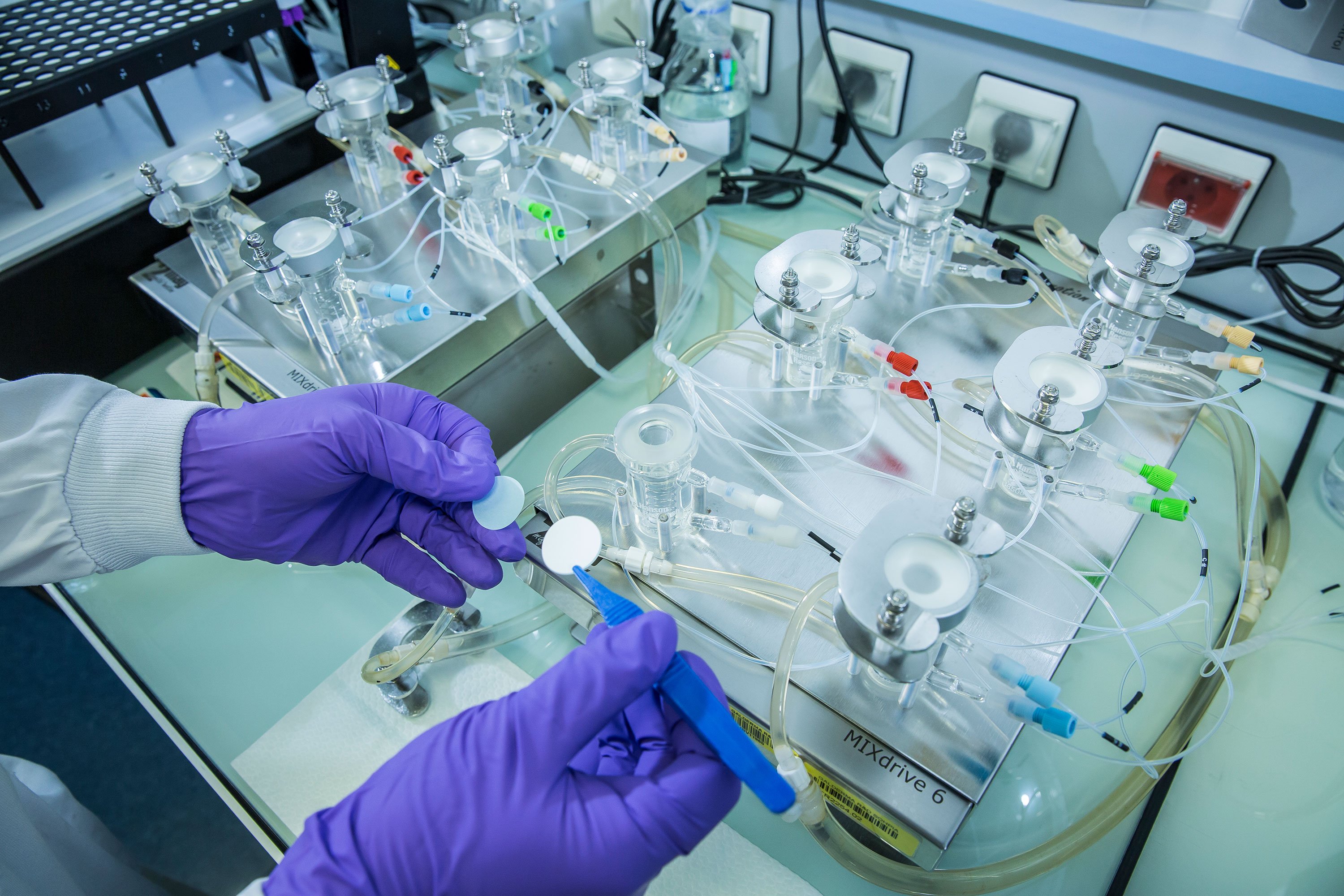
We designed a customised IVPT program using human skin obtained from local abdominoplasty donations to:
- Benchmark the dermal delivery performance of six out of ten reformulated candidates against the original ointment
- Support rational down‑selection of the optimal formulation
- Reduce clinical and regulatory risk while preserving program timelines.
Six semi-solid prototypes were evaluated side by side in a vertical diffusion cell model under controlled conditions, applying a mass balance approach tailored to the sponsor's specific needs.
Our findings
Combined with physical, chemical and microbiological stability testing over six months, the IVPT data confirmed the absence of active pharmaceutical ingredient (API) degradation in the optimised formulations. The integrated dataset enabled direct comparison of dermal delivery, formulation robustness and overall developability, resulting in confident ranking of all six candidates.
Our team identified a lead formulation with optimised and comparable dermal penetration plus a qualified back‑up formulation to preserve development flexibility.
All activities were delivered on time and within budget under the oversight of a dedicated corporate project manager (CPM).
Conclusion and client impact
By combining rigorous IVPT with flexible study design and strong project governance, our team supported the sponsor in making an informed, confident selection of the formulation at a critical stage in their development program.
The sponsor entered phase 2a with a reformulated lead candidate backed by human-relevant performance data and a qualified back-up, significantly reducing tolerability risk prior to clinical entry. This case illustrates IVPT’s role as an effective risk‑mitigation tool for topical products.
Our case-specific key technologies
| Formulation optimisation |
|
| IVPT |
|
| Formulation selection |
|
| Project coordination |
|
Facing similar challenges? This is how Nuvisan’s experts can help
Our multidisciplinary team combines expertise in formulation science, dermal drug delivery and regulatory strategy. We partner with pharmaceutical developers to define a clear, science‑driven path forward for topical formulation changes.
In line with regulatory expectations, the team provides science‑driven strategies for assessing dermal penetration and demonstrating bioequivalence across skin layers of active pharmaceutical ingredients. This helps sponsors mitigate risk while advancing their development programs.
Our services included:
- Comprehensive CMC data package analysis to support relevant formulation optimisation
- Design and preparation of multiple semi-solid formulation prototypes for comparative evaluation
- Thorough selection of human skin donors and skin preparation methods to ensure a reliable study design
- Customised IVPT studies using qualified human skin explant models
- Bioanalytical method development and validation to quantify API levels across skin compartments and receptor fluid
- Integrated data review to support formulation ranking and selection
- End-to-end project coordination led by a dedicated CPM.