





Pharmacology

Our experienced team of specialists offers high-quality pharmacology services, from target identification, validation and deconvolution to translational research. With extensive industry experience across target classes and modalities, we implement novel mechanistic cell-based assays and in vivo pharmacology models. Our diverse portfolio of models supports a deep exploration and understanding of drug targets and disease biology, as well as the mode-of-action of your drug candidates. We make use of state-of-art in vitro and in vivo models, combined with an extensive assay technology platform for broad characterisation. 
Scientist using a computer for immunofluorescence microscopy in a lab

Target identification, validation and deconvolution

Our experienced scientists collaborate with your team using advanced functional genomics and in vitro/in vivo assay platforms. This enables us to identify, validate and deconvolute disease-relevant targets, providing a strong foundation for your drug discovery and development.

learn more
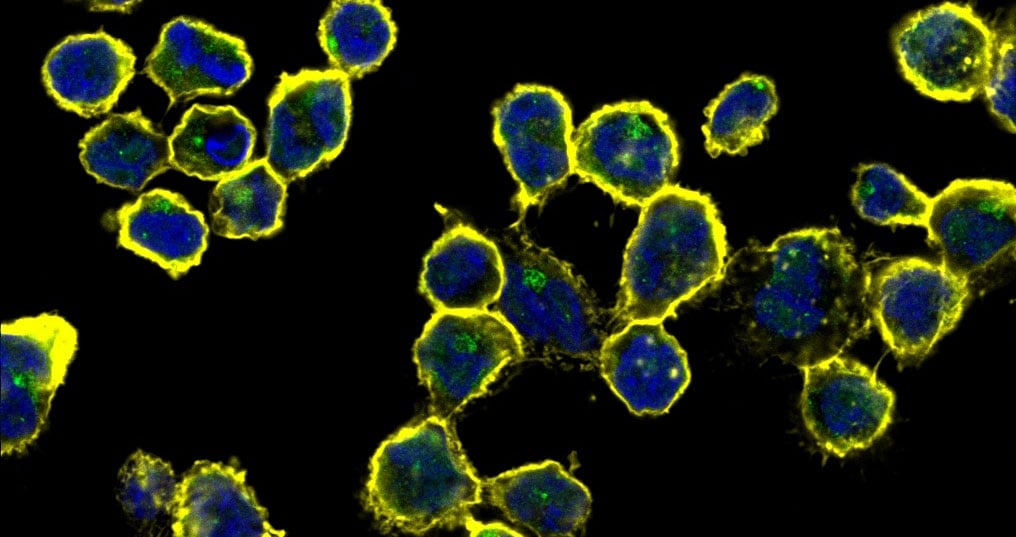
Human immune cells stained with a fluorescently labelled antibody

Cell-based assays

Cell-based assays are crucial for drug discovery and development, providing a realistic biological context. Our biology team offers disease-relevant in vitro and in vivo models to identify leads and targets, including high-throughput formats using specialised chemical libraries. Additionally, these models help determine the structure-activity relationships of drug candidates, validate signaling pathways and mechanisms of action and identify biomarker candidates to support the success of the project.

learn more

Ex vivo analysis, in vivo study, µCT imaging

In vivo pharmacology

Assessing efficacy and pharmacokinetics in living organisms, in vivo pharmacology helps provide insights into drug interactions, metabolism and excretion, while identifying potential biomarkers and side effects. We offer disease-relevant models for various indications and provide in vivo biodistribution studies for lipid nanoparticles and adeno-associated viruses.

learn more

Frequently asked questions (FAQs)

  • Target identification, validation: How do you help ensure a proposed target is truly disease-relevant ?
    We combine functional genomics with fit-for-purpose in vitro and in vivo assay platforms to test causality, not just correlation. This typically includes perturbation approaches (e.g., gene modulation), pathway and phenotype readouts, and orthogonal confirmation to deconvolute mechanisms. The goal is to build a robust evidence package that links target modulation to meaningful biology and informs early translation strategy.
  • What types of cell-based assays can you develop, and how do you tailor them to a project?
    We design cell-based assays around the biology that best represents your question—mechanistic target engagement, pathway signaling, functional phenotypes, or disease-relevant responses. Assays are selected and optimized to be decision-enabling (e.g., potency/efficacy ranking, selectivity, MoA differentiation), and can be built for throughput and robustness depending on whether you are screening, profiling, or supporting lead optimization.
  • In vivo pharmacology and translational relevance: How do you approach in vivo study design to maximize translational value?
    We start from the intended clinical question and work backwards to select the most relevant model(s), endpoints, and biomarkers. Study designs are tailored to capture pharmacodynamic effects, exposure–response relationships, and meaningful efficacy readouts. We also align sampling and bioanalytical plans to support mechanistic interpretation and reduce iteration cycles.
  • How do you integrate results across assays to guide go/no-go decisions?
    We build a coherent “line of evidence” across assay tiers—linking target engagement to functional cellular outcomes and then to in vivo pharmacology endpoints. This integration helps distinguish true biology-driven signals from assay artifacts, supports MoA confidence, and improves candidate selection by emphasizing consistency, reproducibility, and exposure-aligned efficacy rather than single-point readouts.