
Developing a GMP-compliant IVRT method enabling regulatory-grade confirmation of formulation equivalence for a topical semi-solid product
A pharmaceutical client sought to develop a novel semi-solid topical product, a cream, and required a robust, in vitro release testing (IVRT) method to support both development and regulatory submission.
In line with FDA (SUPAC-SS) and EMA guidance, the client needed to meet two critical objectives:
(1) Demonstrate formulation equivalence by confirming consistent release kinetics between fresh and aged batches across manufacturing scale-ups.
(2) Establish discriminatory power by showing the IVRT method could reliably distinguish release profiles between the product under development and a commercial reference product.
Meeting these objectives required overcoming three technical challenges:
(1) Severe active pharmaceutical ingredient (API) solubility barriers to achieving sink conditions.
(2) The risk of membrane binding.
(3) The need for high repeatability across replicates to meet regulatory acceptance criteria.
With the client's two critical objectives clearly defined, a team of experts at Nuvisan´s centre of excellence for formulation and GMP manufacturing in Sophia Antipolis developed a structured, efficient strategy to deliver the robust, reproducible IVRT method the program required.
Using the Higuchi linear diffusion model, the team modelled drug release kinetics, defining the in vitro release rate (IVRR) as the primary critical quality attribute (CQA). All testing was performed on a fully qualified, automated Vision® Microette™ system for Franz diffusion cells – 18 vertical diffusion cells (USP Type A, 7 ml) operating in parallel under strict GMP conditions.
The team conducted an extensive screening of membrane-receptor media combinations to evaluate their impact on IVRR. The method was then optimised against all parameters required by the guidelines, including stability, sink conditions, back diffusion, release linearity, lag time, drug release rate and cumulative amount. A final confirmatory run series validated the repeatability of the fully optimised method.
Our team of experts identified the optimal membrane-receptor media configuration: a PTFE 0.45 µm membrane paired with a ternary receptor medium comprising buffer pH 6.8 and a mixture of organic solvents. This combination delivered API stability over the required time, zero membrane binding, excellent linearity (r² > 0.95) and intermediate precision below 10 per cent – meeting all regulatory acceptance criteria in full.
With a fit-for-purpose method in place, the team performed comparative runs between the sponsor's product and the reference product, calculated IVRR test/reference ratios and evaluated them against the regulatory acceptance windows: 0.75–1.33 for FDA SUPAC-SS and the stricter 0.90–1.11 window required by EMA.
The method demonstrated clear discriminatory power. IVRR ratios between the sponsor's product and the commercial reference product ranged from 1.85 to 2.31 (outside both regulatory acceptance windows), confirming meaningful differences in drug release profiles.
Formulation equivalence was likewise established. IVRR ratios between fresh product and end-of-shelf-life product ranged from 0.94 to 1.09, falling within both acceptance windows. This confirmed that manufacturing scale-up and ageing had no impact on drug release kinetics and directly addressed the client's core development objective.
Nuvisan's structured IVRT development strategy delivered a sensitive and selective method within a compressed timeframe, providing the client with regulatory-grade data precisely aligned with their development objectives.
By demonstrating that manufacturing scale-up and process ageing had zero impact on drug release kinetics, the client avoided the time, cost and operational burden associated with full clinical in vivo bioequivalence trials.
Establishing IVRR as a critical quality attribute (CQA) strengthened the CMC section of the regulatory dossier, providing robust intellectual property (IP) protection against generic and counterfeit competition and reinforcing the scientific integrity of the submission package.
Overall, these outcomes opened a clear, lower-risk pathway to clinical scale-up, global regulatory submission and commercial market entry for our client.
|
Method development strategy |
A structured approach guided all method development decisions, from membrane selection to discriminative power supporting regulatory robustness from day one. |
|
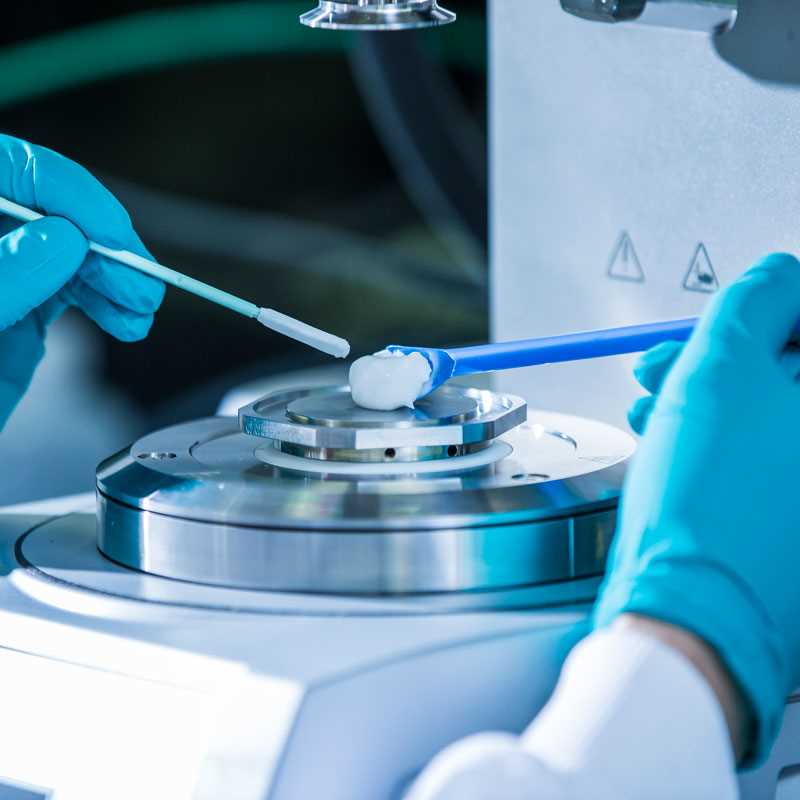
Automated Franz cell diffusion testing with Vision® Microette™ test system by Hanson Research Corp |
Three sets of six vertical diffusion cells (USP type A, 7 ml) running in parallel, with automated micro-sampling (0.2–1.5 ml) and support accurate, precise and reproducible results. |
|
High-throughput HPLC analysis |
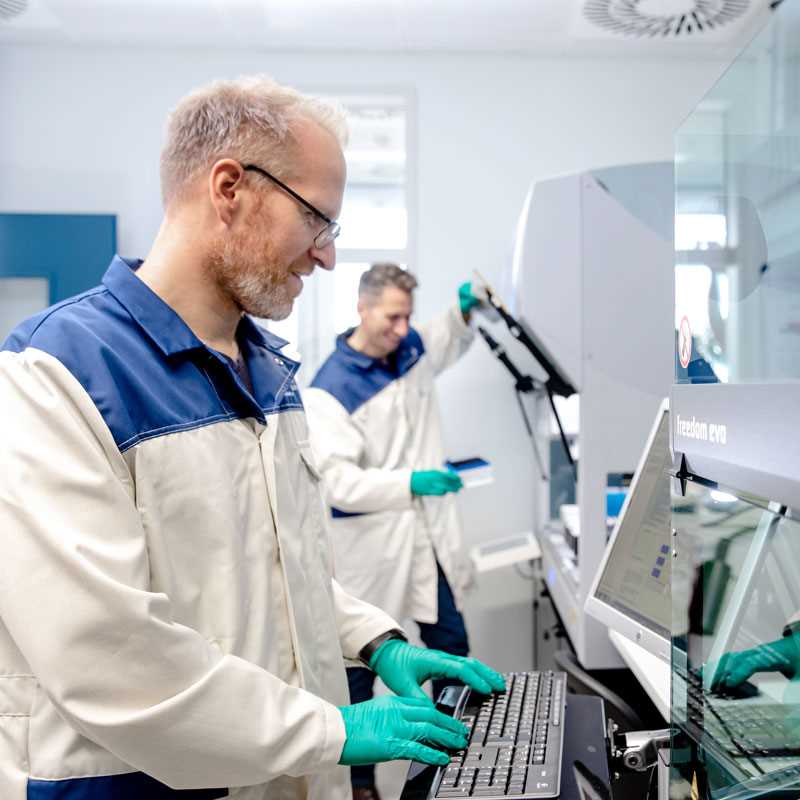
All cell samples were processed using a high-throughput HPLC method, enabling rapid quantification across the full 18-cell array and minimising analytical bottlenecks. |
|
Statistical evaluation |
Our experts took full ownership for the statistical evaluation, applying the equivalence approach mandated by the guidelines. |
Nuvisan's IVRT specialists support pharmaceutical and biotechnology companies, as well as generic drug manufacturers, throughout the product lifecycle, from early formulation screening through post-approval change management to bioequivalence studies. Working within a purpose-built, GMP-compliant platform at our centre of excellence for formulation and GMP manufacturing in Sophia-Antipolis, our experts design, validate and execute IVRT studies that meet FDA and EMA requirements and withstand regulatory scrutiny.
Our capabilities include:
EMA/CHMP/QWP/708282/2018: https://www.ema.europa.eu/en/documents/scientific-guideline/guideline-quality-equivalence-locally-applied-locally-acting-cutaneous-products_en.pdf
Guidance document (21 October 2022): In vitro release test studies for topical drug products submitted in ANDAs https://www.fda.gov/regulatory-information/search-fda-guidance-documents/in-vitro-release-test-studies-topical-drug-products-submitted-andas
Guidance document (05 May 2020): SUPAC-SS: non-sterile semi-solid dosage frms; scale-up and post-approval changes: chemistry, manufacturing and controls; in vitro release testing and in vivo bioequivalence documentation
https://www.fda.gov/downloads/Drugs/GuidanceComplianceRegulatoryInformation/Guidances/ucm070930.pdf
Supporting pharmaceutical and biotech clients from development to regulatory submission.
Learn more
Expert analytical testing from early development to regulatory submission.
Learn more
Viscosity, texture, rheology, IVRT, IVPT and stability testing to support topical product development.
Learn more


























 Contact Us
 Search