Let's connect

Want to discuss your project or have any questions?

Understanding drug properties

Physicochemical characterisation (PhysChem) is crucial for optimising drug candidates during discovery. Key properties like lipophilicity, solubility and stability provide insights into DMPK parameters such as permeability and bioavailability. These measurements are foundational for ADMET characterisation and are tailored to fit both the “rule of five” and beyond. In collaboration with our Digital Life Sciences unit, we help refine your compounds for successful development.

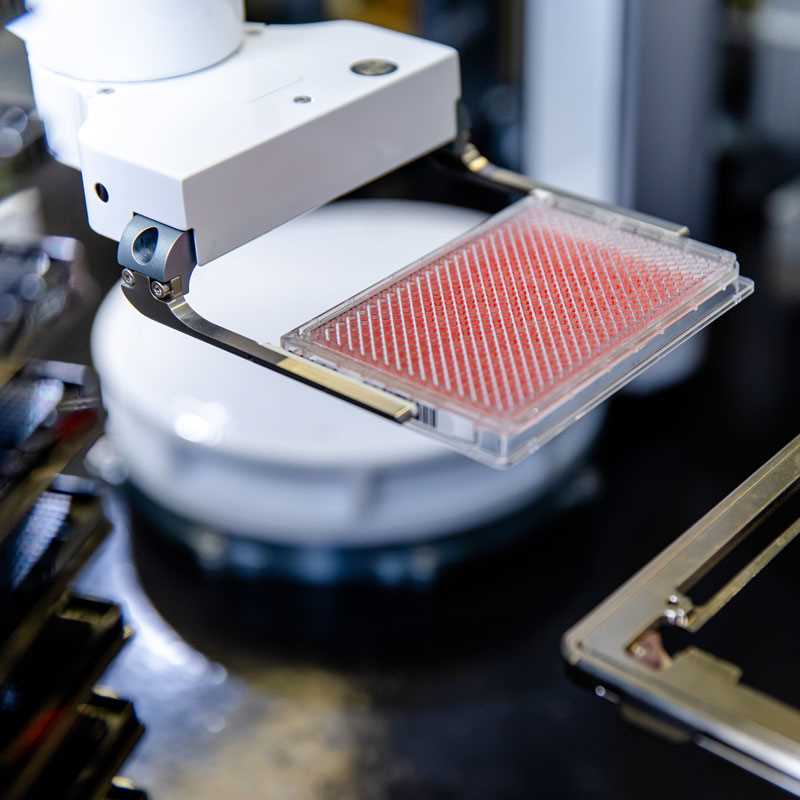
A rack of samples for HPLC analysis

Physicochemical characteriation (PhysChem)

Our advanced platforms offer a comprehensive range of services:

  • Lipophilicity assessment
    • High-throughput logD determination using HPLC-based systems.
  • Solubility screening
    • Rapid kinetic solubility assays (DMSO-based).
    • Thermodynamic solubility in biorelevant media (FaSSIF, FeSSIF, FaSSGF).
  • Stability studies
    • Degradation analysis in varying pH, heat, oxidative and gastric juice conditions.
    • Reactivity assessments for covalent binders (glutathione, cysteine).
  • Specialised characterisation
    • Crystallinity (XRPD) and polar surface area (EPSA)
    • Tailored packages for PROTAC®s, peptides and macrocycles.
These services ensure your drug candidates are optimised for in vivo studies and beyond.

Frequently asked questions (FAQs)

  • What is the difference between kinetic and thermodynamic solubility?
    Kinetic solubility is the apparent solubility measured shortly after mixing a compound (often a DMSO stock solution) with the test medium, before equilibrium is reached. At NUVISAN, we offer a high-throughput dual assay that simultaneously determines kinetic solubility and chromatographic logD, making it well suited for a large number of compounds in early drug discovery.

    Thermodynamic solubility is the true equilibrium solubility measured after the compound has fully equilibrated starting with solid material; it is therefore more reproducible and generally more predictive for developability.
     
  • What kind of media do you offer for your solubility assays?
    We are highly flexible regarding the media used for our solubility assays. We support classical aqueous buffers across a relevant pH range, as well as biorelevant media such as FaSSIF/FeSSIF and FaSSGF. In addition, we can test formulation and cosolvent systems commonly used for advanced PK/PD studies, such as PEGs, surfactants and other vehicle components. Media selection can be tailored to your compound properties and the specific in vitro–in vivo question. 
  • What kind of stability assays do you offer?
    NUVISAN offers a range of stability assays, including hydrolytic stability across relevant pH values, stability in simulated gastric/intestinal fluids, thermal stability, and oxidative stability. We also provide thiol reactivity/stability testing to identify potential covalent or reactive groups or liabilities. The assay conditions (e.g. pH, temperature, timepoints and concentrations) can be adapted to suit your compound and project requirements.
  • What is your experience with modalities beyond small molecules?
    Our scientists have hands-on experience with modalities beyond traditional small molecules, such as macrocycles, PROTACs, ADCs and peptides. NUVISAN has continuously expanded its PhysChem capabilities to address the specific challenges of emerging modalities. To support beyond-Rule-of-5 programs, we have recently implemented EPSA measurements and can integrate them with complementary PhysChem data packages.
  • What is EPSA and when is it useful in drug discovery?
    EPSA (Experimental Polar Surface Area) is a SFC (supercritical fluid chromatography)–based measurement that provides an experimental estimate of a compound’s effective polarity. It is particularly useful for guiding the optimization of permeability and oral absorption within a compound series, especially for beyond-rule-of-5 chemotypes where calculated PSA may not reflect real behavior. At NUVISAN, we have established a high-throughput EPSA method with attached MS detection to enable rapid, data-driven decision-making.