Case study: ATR kinase inhibitor
Lead identification and optimisation using a combination of high-throughput screening and structure-based design
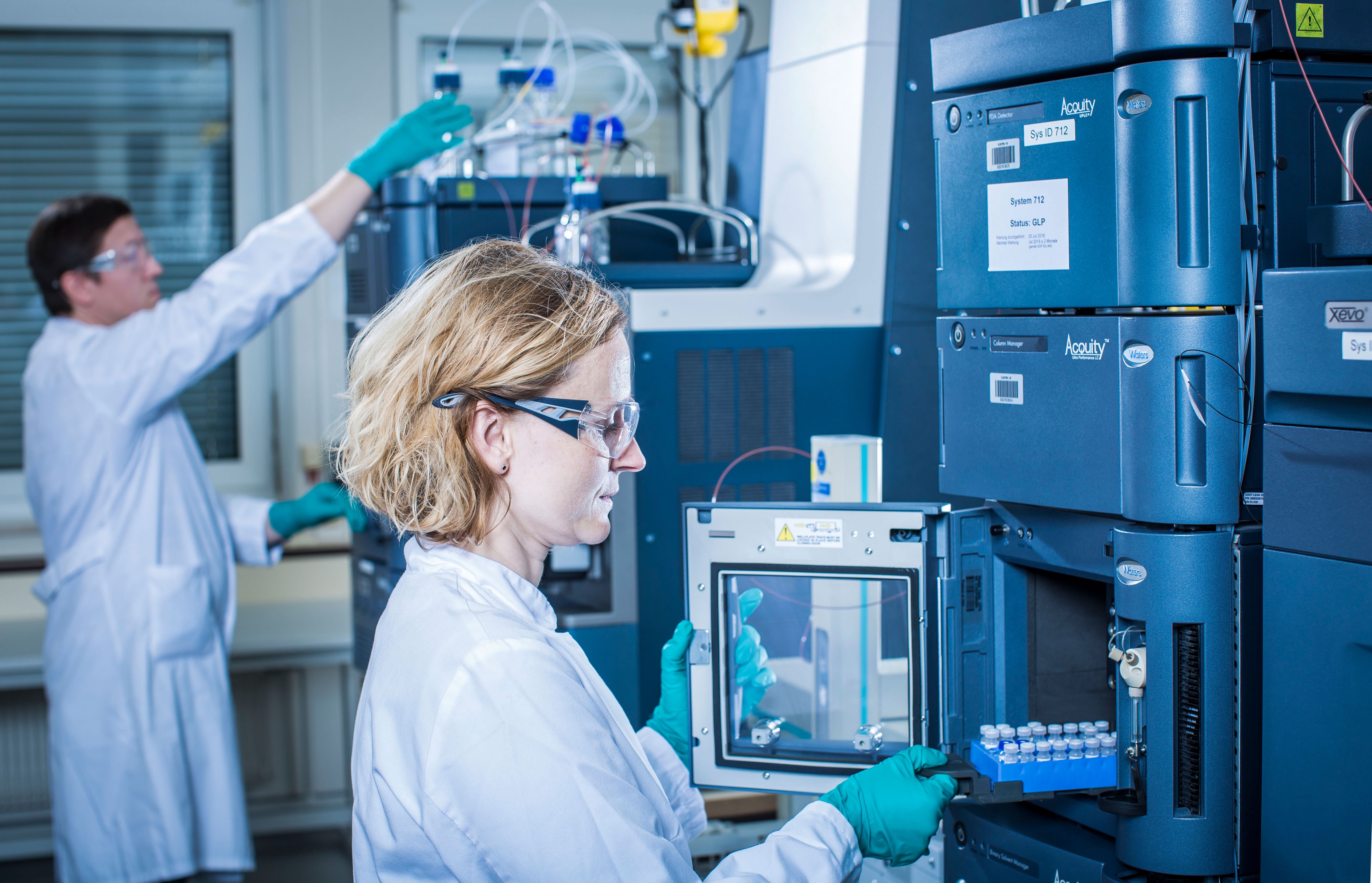
Case study: BTZ-043 human AME study
Handling the challenge of unstable hydride Meisenheimer complexes and other metabolites

Our dedication to excellence
Innovation and collaboration is best expressed through the words of our clients. Their testimonials reveal how passionately we support and partner with each client to help them achieve their unique goals.

Working with us
We believe collaboration is the key to innovation and success in the life sciences. When you partner with us to advance pharmaceutical and biotechnology innovations, we work closely with you to help improve patient outcomes through groundbreaking discoveries. Benefit from the world-class expertise and commitment of our dedicated teams and the advanced technologies in our state-of-the-art facilities. From pharmaceutical companies and biotech start-ups, to venture capital firms, non-profits and university or research institutions, we welcome the opportunity to explore joint ventures with you and your organisation.
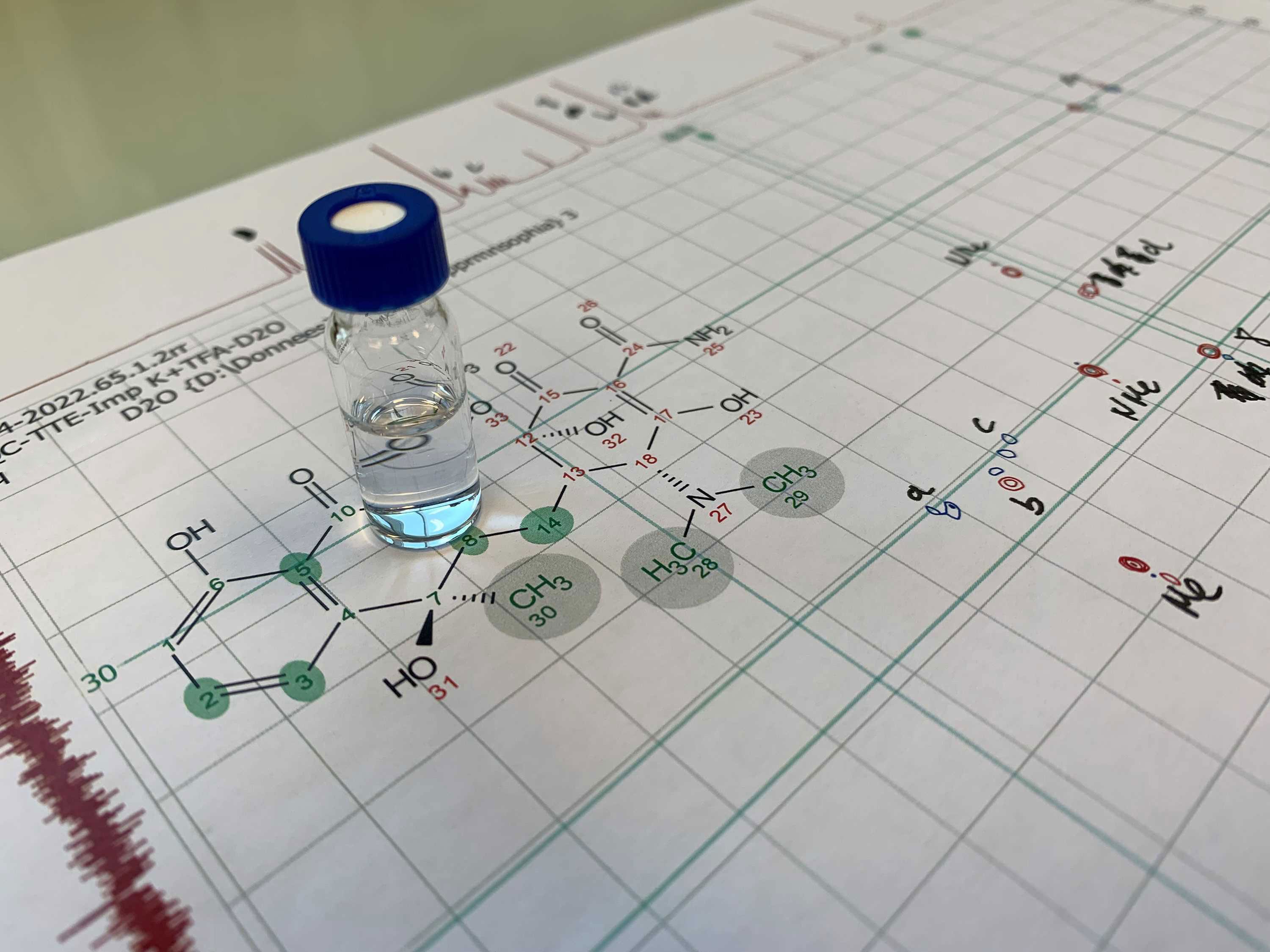
Case study: codeine impurity identification
A complete [1H], [13C] and [15N] assignment of an unknown codeine impurity
Add Headline Here.
“[…] Their dedication, flexibility, and quality make them an invaluable support in our preclinical drug development."
Dr. Janet Peper-Gabriel
Head of Discovery and Preclinical
Plectonic Biotech, Germany

“[…] Nuvisan is a true strategic partner for any biotech company seeking high-quality services.”
Yann Godfrin, Ph.D.
CEO
Axoltis Pharma
“[…] In my experience, there is no better partner than Nuvisan to design and execute derisking studies and to implement early stage drug discovery workflows. […]”
Lev Osherovich, Ph.D.
CSO and Founding Director
Tilikum Therapeutics Inc.
Case objective
A biopharmaceutical company based outside of Europe developed a novel biological drug, intended for therapeutic use in oncology. Like other global manufacturers from countries without mutual recognition agreements (MRA) who wish to import their products within the European economic area (EEA), they needed to have their batches retested in EU prior to batch release. The product was manufactured in a third country and had not yet been introduced to the European market. The client aimed to initiate a marketing authorisation application (MAA) in the European Union under the centralised procedure, using the common technical document (CTD) format.
Our approach and impact
Given the complexity of European regulatory requirements — particularly for biologics — expert guidance was essential to help ensure that the supply chain, quality systems and documentation met European expectations. This included compliance with EU-GMP standards (annex 16), QP oversight and batch release readiness. Nuvisan supported the client throughout the entire preparation phase for entering the European market. As part of it, QA/QP activities were critical because they helped ensure regulatory compliance, product quality and patient safety. A Nuvisan qualified person (QP) certified that each batch met EU GMP standards, thereby supporting our clients in selling their products in Europe.

Our case-specific key technologies
| Importation and storage |
|
| EU full reanalysis |
|
| QC release and CoA |
|
| QP release |
|
Facing similar challenges? This is how Nuvisan´s experts in quality assurance can help you ensure compliance with EU GMP regulations through QA/QP oversight
Nuvisan’s team has several QPs and is certified as an importer and manufacturer of human, veterinary and investigational medicinal products. Providing expert guidance, we help ensure that all quality and GMP-related elements comply with EU standards. Additionally, EU retest of finished products (small molecules or biologics) can be supported through our certified laboratories.
Our services include:
- Gap analysis: identify gaps between existing documentation and EU regulatory requirements
- QP declarations:
- Support the preparation of QP declarations by verifying GMP compliance across the manufacturing sites of the supply chain sites
- On-sites GMP audits in all countries involved in manufacturing, QC testing, storage and distribution of drug substance and drug product manufacturing sites
- Authorisation of importation requests to the medicine’s agency
- EU retest: finished product testing in Nuvisan EU-certified labs
- Batch review: evaluate batch records and quality data to ensure conformity before QP release
- QP certification and release
- Sample storage: provide secure EU-based storage for reference and retention samples
- Stability studies: manage stability testing programs according to ICH guidelines and EU requirements
- Lifecycle monitoring: conducting annual product quality reviews and helping ensure ongoing regulatory compliance post-launch.
Case objective
The identification and structural elucidation of impurities is a routine requirement in process development according to the ICH Q3A(R2) and Q3B(R2) guidelines. Indeed, impurity identification is critical because impurities can affect drug safety, efficacy and quality. Identifying and controlling them helps ensure compliance with regulatory standards and protect patient health. In this case, an unknown impurity was found in a codeine drug product syrup during a yearly stability study. This raised safety concerns and required quick action to characterise the impurity and perform a toxicological assessment in order to exclude any patient risk.
Our approach and findings
High-resolution mass spectrometry (HRMS) investigations indicated an oxidation of codeine that had no instances of occurrence in known literature. Hydrogen peroxide oxidation of codeine was performed to enrich sample with the targeted impurity, submitted to preparative high-performance liquid chromatography (HPLC) and fully characterised by nuclear magnetic resonance (NMR) techniques. Position of oxidation and absolute configuration were determined using constant time inverse-detection gradient accordion rescaled heteronuclear multiple bond correlation (CIGAR-HMBC) spectroscopy at natural abundance.
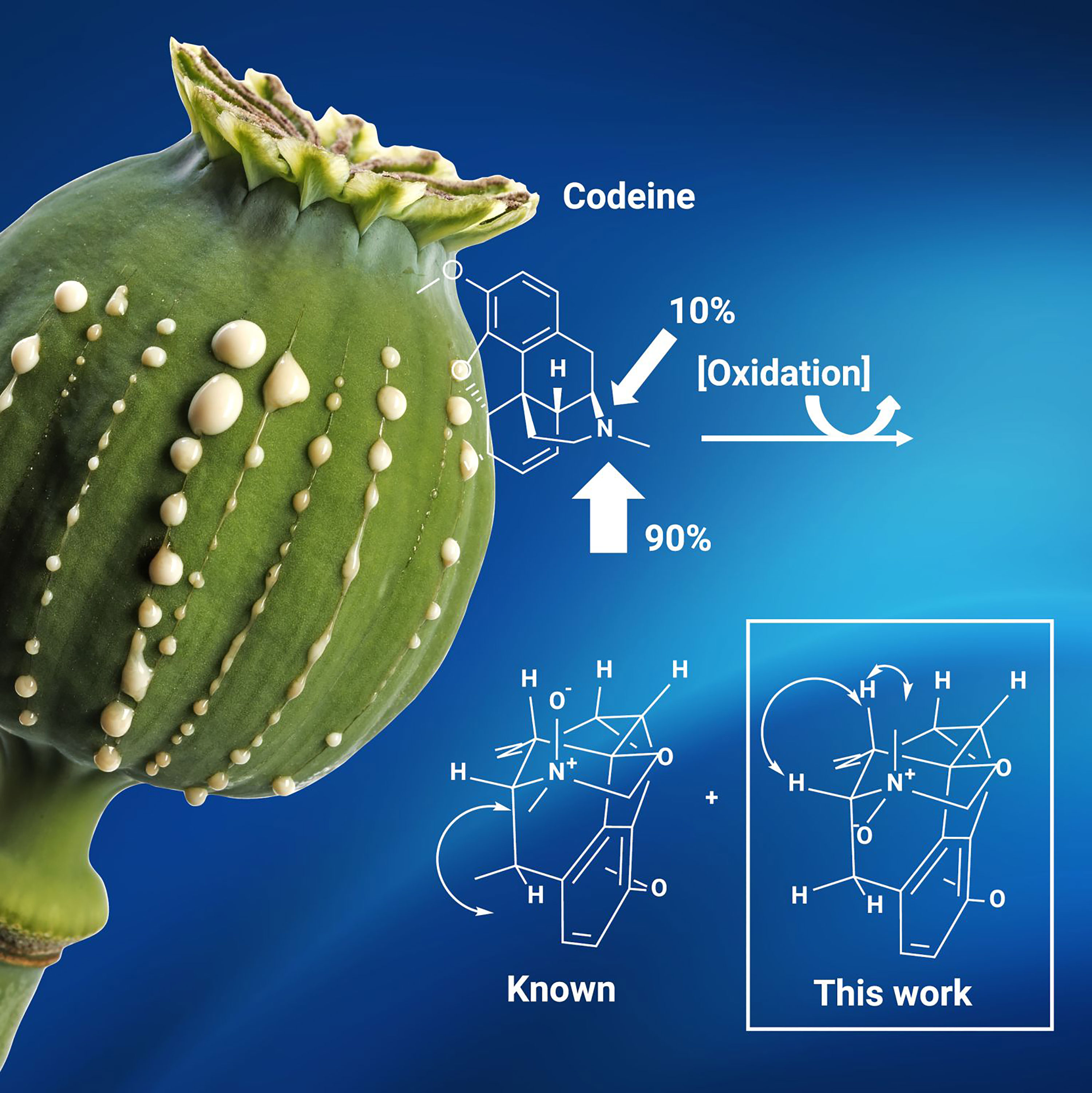
Elucidation of codeine and its (known and newly discovered) impurities
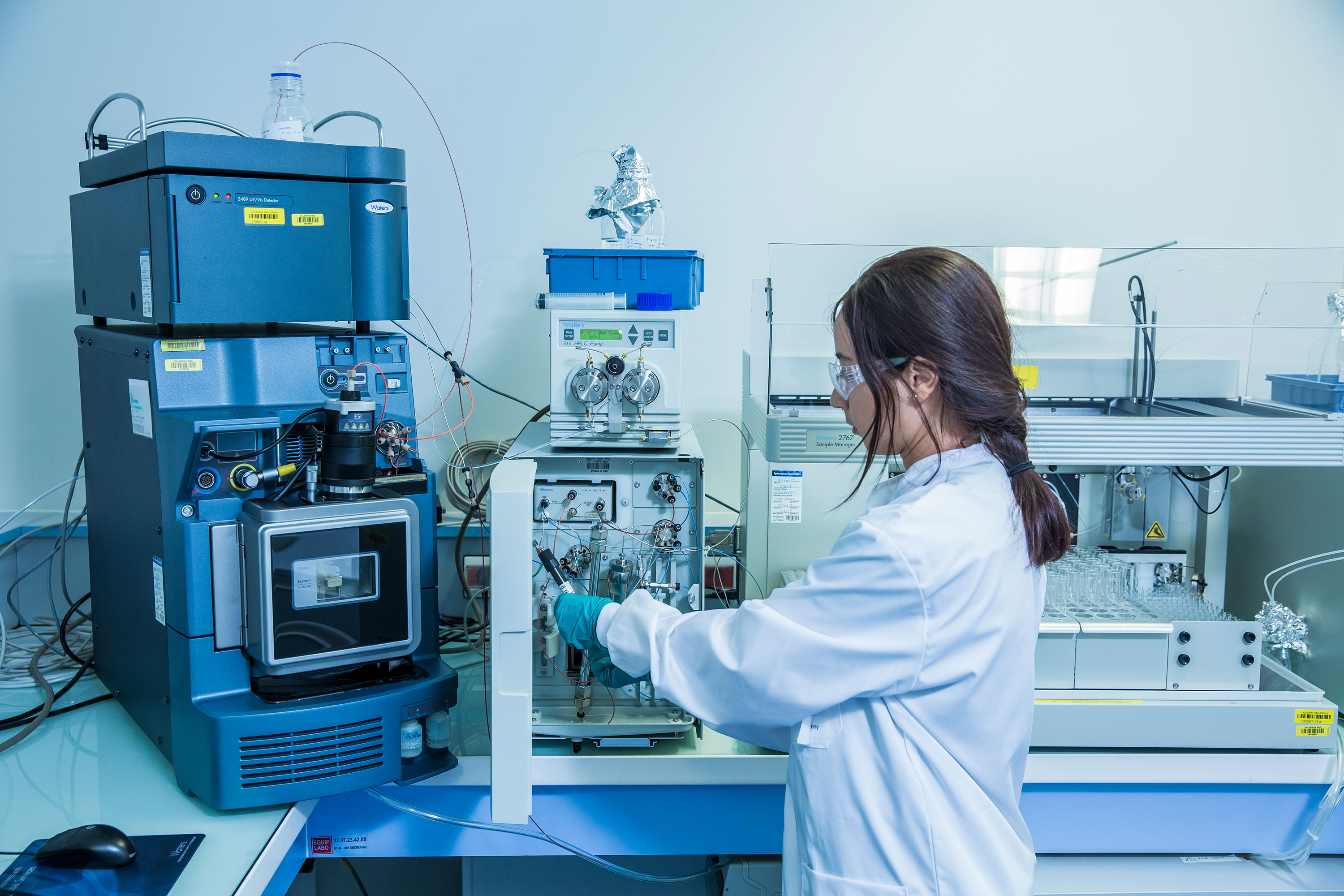
HRMS as an efficient and accurate impurity identification method
Conclusion and impact
We were able to comprehensively characterise the unknown impurity quickly, enabling Nuvisan´s toxicologist to conduct an in silico toxicological qualification and remove any safety concerns. This also led to a reassessment of impurities in the codeine drug product, which was then used to update the regulatory files.
Our case-specific key technologies
| Structural elucidation |
|
| Handling of controlled substances |
|
| Impurity isolation |
|
| Impurity synthesis |
|
| Characterisation |
|
Facing similar challenges? This is how Nuvisan´s chemical development experts can help to overcome impurity challenges
Our highly experienced scientists can isolate, identify, synthesise and assess unknown impurities present at very low levels (<0.1 %) at every stage of the drug development lifecycle. Our chemists can identify degradation pathways and potential ingredient interactions that will facilitate the examination of dossiers by regulatory agencies.
Our capabilities include:
- Development of a mass spectrometry (MS)-compatible method
- HRMS using Q-exactive equipment
- Fragmentation at different voltages of active pharmaceutical ingredients (API) and impurities and proposition of formula
- Chemical oxidation of codeine to enrich impurity content
- Isolation of impurity using preparative HPLC
- Structure elucidation using NMR techniques: [1H], [13C], correlation spectroscopy (COSY), heteronuclear single quantum coherence (HSQC), heteronuclear multiple bond correlation (HMBC), heteronuclear single quantum coherence (NOESY), CIGAR
- Synthesis of impurity on gram scale with full characterisation and certificate of analysis (CoA)
- Response factor measurement in the client analytical method.
CONTACT US
Source
Boiteau, J.-G. et al., Complete [1H], [13C] and [15N] assignments of the minor isomer of codeine N-oxide, Magn Reson Chem, 60, 12, 1185-1188 (2022).https://doi.org/10.1002/mrc.5302